
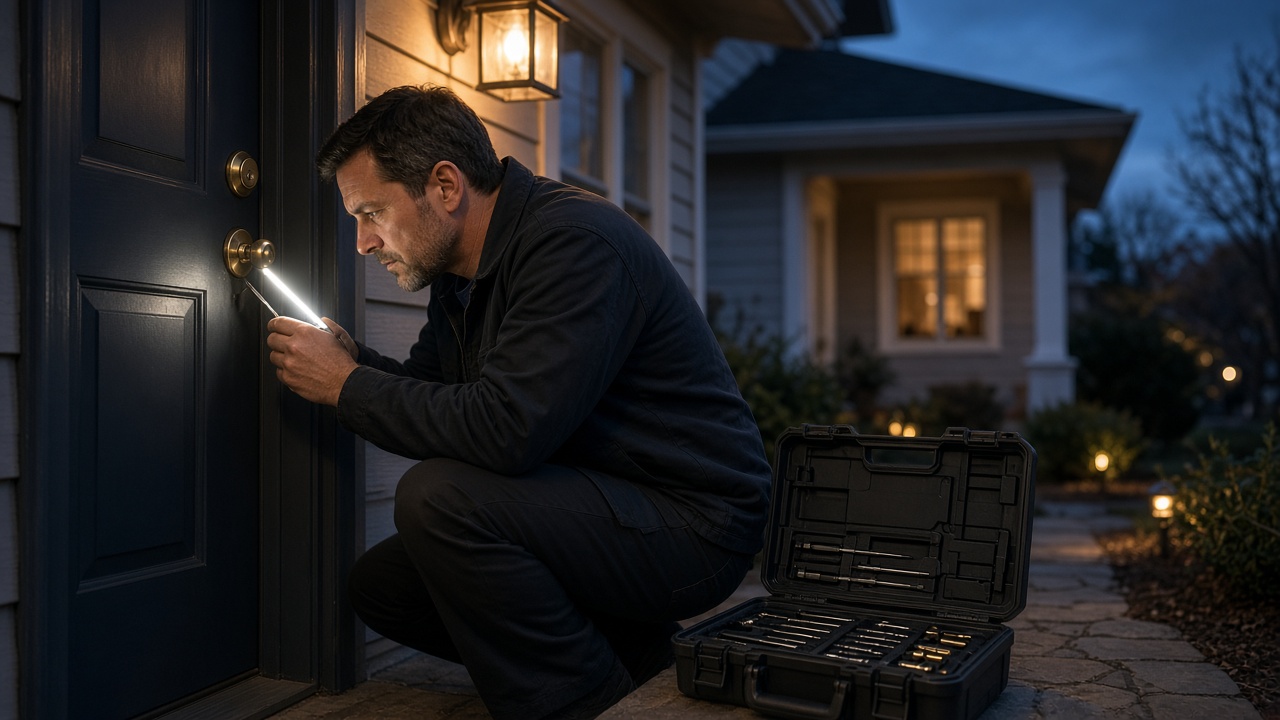
Best Phone System for Locksmiths (2026)
A locksmith’s published number is how a renter reports a snapped key at 11 p.m., how an office manager asks for a rekey after a termination, and how a driver sends a photo of a car door that will not open in a grocery lot. If that number is a personal cell in a van, it rings over a drill, at dinner, and during the first ice storm. If it is a single shop landline, it dies the moment the owner is on a porch and the helper is at the supply house. In 2026 the job is one number already on the van magnet and Google, more than one person who can answer it, and a path when every tech is already on a lockout.
This guide is for US independent locksmiths and small mobile shops — not the broader contractor phone-system guide, not the auto-shop guide, and not the after-hours answering guide. Locksmithing has a different after-hours queue: residential lockouts, car entries, commercial rekeys, and “the alarm company said to call you.” It uses only published XI jobs: calling, SMS, routing, forwarding, a virtual receptionist, and CRM notes. List prices are the pricing-page cards: $17 Starter, $20 Business, and $23 Business Plus per user / 30 days.
What a locksmith shop actually needs from a phone
You need identity: caller ID that says the shop, not a helper’s mobile that looks like a spam robocall when you return a property-manager voicemail. You need sharing: the shop tablet, an on-call tech, and the owner can pick up the same published line from a phone, a tablet, or a browser. You need fallback: an unanswered ring during a live lockout should try someone else, play a short greeting, or take a voicemail you can read between pins — not vanish into a pouch on a belt.
XI is a virtual phone system. The DID lives on the account. Calls ring iOS, Android, macOS, Windows, or the web app. Desk phones are optional. If the number is already on the van, invoices, and Google, port it instead of reprinting door hangers. If you add a commercial-only line or a night overflow DID, claim another local number from business numbers. Starter includes one number. Extra numbers are listed on the pricing page.
A two-tech shop does not need a campus PBX. It needs a published number that still works when the owner is picking a deadbolt and the apprentice is at the lock wholesaler. Cloud calling does not open the door. It does let you decide, in software, who rings and what happens after midnight. The home-services solutions page and the answering-service overview describe that coverage in product language. Use them as the overnight story. Use routing for the workday. XI is not a dispatch suite and not a substitute for 911.
Why a cell on a porch or a shop landline falls short
Many one- and two-tech shops start with a cell that is also the Google listing. It works until that phone is in a tool bag on a porch, on a charger in the van, or in a pocket you cannot reach with gloves and a pick set. A copper line at the shop has the opposite problem: it only rings in one room, and it cannot text the same number a driver just called about a car lockout.
Neither option gives you a written thread of who called, who answered, and whether an ETA was promised. XI VoIP calling puts the shop number on every signed-in device. Sequential ring can try the shop tablet, then the on-call tech. Simultaneous ring can light two seats during a storm or a Saturday lockout spike. Time-of-day routing can send overnight calls to voicemail or to a spoken menu if you use the virtual receptionist.
If you have been comparing a personal-style number, read XI vs Google Voice. A shop usually needs a shared published line you can hand to the next hire without moving SIM cards. For a larger UCaaS brand, XI vs RingCentral is the compare page. This site does not invent close rates for either path.
After-hours lockouts are a routing job, not a second cell
Locksmith after hours is not “press 1 for sales.” It is “are you locked out of a house, a car, or a storefront, and is anyone still inside.” Call routing can use a schedule: shop hours to the office, nights to an on-call seat, weekends to a short greeting plus voicemail if nobody is on. Forwarding covers busy and no-answer hops so a live lockout does not die in one pocket.
The after-hours answering guide is the generic small-business version of this. Locksmithing is narrower: house versus car versus commercial, whether the caller has ID on site, and whether a property manager already authorized a rekey. A spoken tree is the virtual receptionist, listed on Scale. Talk to sales if you need the menu on another plan. See how to set up an auto attendant before you record a long tree. Keep emergency language honest: this is not 911. If someone is trapped or injured, the greeting should say to call emergency services first.
Do not invent a second personal cell “just for nights.” That number will leak onto Google, onto a magnet, and onto a helper’s resume. Keep one published DID. Change who it rings. Business includes voicemail with transcripts so a 2 a.m. message is readable when you finish the current door. Call recording is on Business if your state requires notice — follow the consent rules that apply to you. Recordings help with “what ETA did we say,” not with proving a job was finished.
Same-number texts for lock photos and ETAs
Customers already photograph the lock, the keyway, or the car door. They will send that picture if the number they called can receive it. XI messaging is two-way SMS and MMS on the business DID. That is not a personal iMessage thread. US application-to-person texting needs A2P 10DLC brand and campaign registration. Inbound SMS is listed on the pricing page. The business texting guide is the same-number walkthrough.
Only text people who agreed to receive texts. A missed-call “we’re 20 minutes out” is useful. A blast to every past invoice is not this product. Notes belong next to the thread. XI CRM is contacts, notes, and history — not a field-service suite. If you already live in Jobber, HubSpot, Slack, or Zapier, those connectors are listed on integrations.
Do not assume texts follow the number the hour a port completes. Voice and SMS can move on different clocks. Keep the old carrier reachable until both work. The porting checklist is the paperwork. This page is the shop plan around it. If you cover more than one city, multi-location phone systems is the two-address map — useful when a second van lives in another ZIP.
Pricing without a second quote
Public XI prices are the pricing-page cards. Starter is $17 per user / 30 days: a ready-to-use calling system, one DID, unlimited US/CA calls, mobile plus desktop apps, and standard support. Business is $20 per user / 30 days and adds recordings, voicemail transcripts, voicemail, a personalized greeting, and 24/7 support. Business Plus is $23 per user / 30 days for higher threshold limits. Scale is custom.
Virtual receptionist, shared numbers, and API access are listed on Scale and as not included on the three public cards. Extra DIDs and inbound SMS are listed on the pricing page. There is no second “locksmith edition” price. Compare the cards to the line items on your current carrier bill instead of a made-up industry average. Count people who answer the phone, not every helper who rides along.
How to switch without missing a lockout
First, pick the number you will keep publishing: port the current line or buy a new local DID. Second, put every person who answers the phone on an XI seat. Third, set business-hours routing and a no-answer path before you change the Google listing. Fourth, turn on SMS only after you have a consent path you can explain. Keep the old carrier forwarding to XI until the port completes.
The FAQ covers porting, apps, and what each plan includes. If you are still deciding whether to keep copper, VoIP vs landline cost is the line-item comparison. For a full provider change, how to switch business phone providers covers inventory, parallel ring, and canceling the old account last. Call +1 (833) 776-0111 if you want the inventory walked through before you submit a port.
Talk to XI
Put the shop number on XI, keep the line customers already save, and route the next missed lockout on purpose. Starter is $17/user/30 days.
FAQ
- Can a locksmith keep the number already on the van and Google?
- Yes. XI supports number porting for a local or toll-free number you already publish. Call forwarding can keep the line reachable while the port completes. Start from the porting page.
- Which XI plan should a small locksmith shop start with?
- Published US plans are Starter at $17/user/30 days, Business at $20/user/30 days, and Business Plus at $23/user/30 days. Starter covers calling, one number, and unlimited US/CA calls. Business adds recordings, voicemail transcripts, and 24/7 support. Virtual receptionist is listed on Scale — talk to sales if you need it on another plan.
- Can a locked-out customer text a photo of the lock to the same number they called?
- Yes. XI supports two-way SMS and MMS on the business number. US A2P 10DLC brand and campaign registration is required for application-to-person texting. Inbound SMS is listed on the pricing page. Only text people who agreed to receive texts.
- What happens to calls when every tech is on a lockout?
- Set sequential or simultaneous ring so the shop tablet and an on-call tech can pick up. Use time-of-day routing after hours. Business includes voicemail with transcripts. A spoken menu is the virtual receptionist — included on Scale, or ask sales for other plans. Keep emergency language honest: this is a locksmith line, not 911.