

Evaluating Mean Opinion Score (MOS): The Metric for VoIP Call Quality
"The call sounds bad" is an entirely unactionable complaint for network engineers attempting to diagnose a support ticket. To troubleshoot unified communications effectively, audio quality must be objectively quantified. The telecommunications industry relies universally on the Mean Opinion Score (MOS) to establish a baseline for voice fidelity.
Historically, MOS was a highly subjective, analog test where human listeners sat in acoustically isolated rooms and rated call clarity on a scale of 1 to 5. Today, it is impossible to manually audit enterprise call volume. Instead, MOS is calculated algorithmically in real-time using advanced mathematical standards like ITU-T P.862 (PESQ) or P.863 (POLQA). These algorithms analyze the audio stream's digital signature, measuring packet timing, compression artifacts, and data loss against a perfect reference signal.
The E-Model and R-Factor Explained
Before translating to the simple 1-5 MOS scale, modern Session Border Controllers (SBCs) and network monitoring tools utilize the ITU-T G.107 standard, known as the E-model. The E-model calculates a transmission rating factor called the R-factor, which ranges from 0 to 100.
The R-factor formula dynamically deducts points from a perfect score of 100 based on specific network impairments. It accounts for the signal-to-noise ratio, quantization impairment (codec compression loss), and the delay impairment (latency and jitter). Once the R-factor is calculated, a standardized mathematical mapping converts it into the recognizable 1-5 MOS scale. An R-factor of 93 maps to a MOS of 4.4, while an R-factor dropping to 60 yields an unacceptable MOS of 3.1.
The MOS Scale Decoded for IT Administrators
- 4.3 - 4.5: Excellent. This is the theoretical maximum for standard G.711 uncompressed audio. The call is indistinguishable from traditional ISDN copper lines.
- 4.0 - 4.2: Good. Typical for highly compressed mobile network audio or G.729 codecs. It is perfectly acceptable for day-to-day business communication.
- 3.5 - 3.9: Fair. Noticeable degradation occurs. You will hear minor robotic artifacts, audio clipping, or a slight echo, but the core conversation remains intelligible.
- Below 3.5: Unacceptable. Severe network jitter, voice clipping, and high latency force users to repeatedly ask "Can you hear me?" or abandon the call entirely.

Monitoring MOS in real-time allows engineers to detect network congestion before it impacts customer satisfaction.
The Trinity of Degradation: Latency, Jitter, and Packet Loss
MOS degradation is mathematically correlated directly to network edge conditions. When Eleven Solutions' telemetry detects a MOS dropping below 4.0, the primary culprits are invariably one of three UDP traffic killers:
- Latency: The absolute time it takes a voice packet to travel from the microphone to the receiving speaker. A one-way delay exceeding 150ms breaks conversational cadence, resulting in awkward interruptions.
- Jitter: Voice packets must arrive at exactly the same interval they were sent (typically every 20ms). Jitter is the variation in this delay. If jitter exceeds 30ms, the receiving jitter buffer overflows, forcing the Digital Signal Processor (DSP) to drop the packets, resulting in robotic audio.
- Packet Loss: Because voice utilizes UDP, dropped packets are never retransmitted. Packet loss exceeding just 1% will immediately pull a MOS score down into the 3.X range.
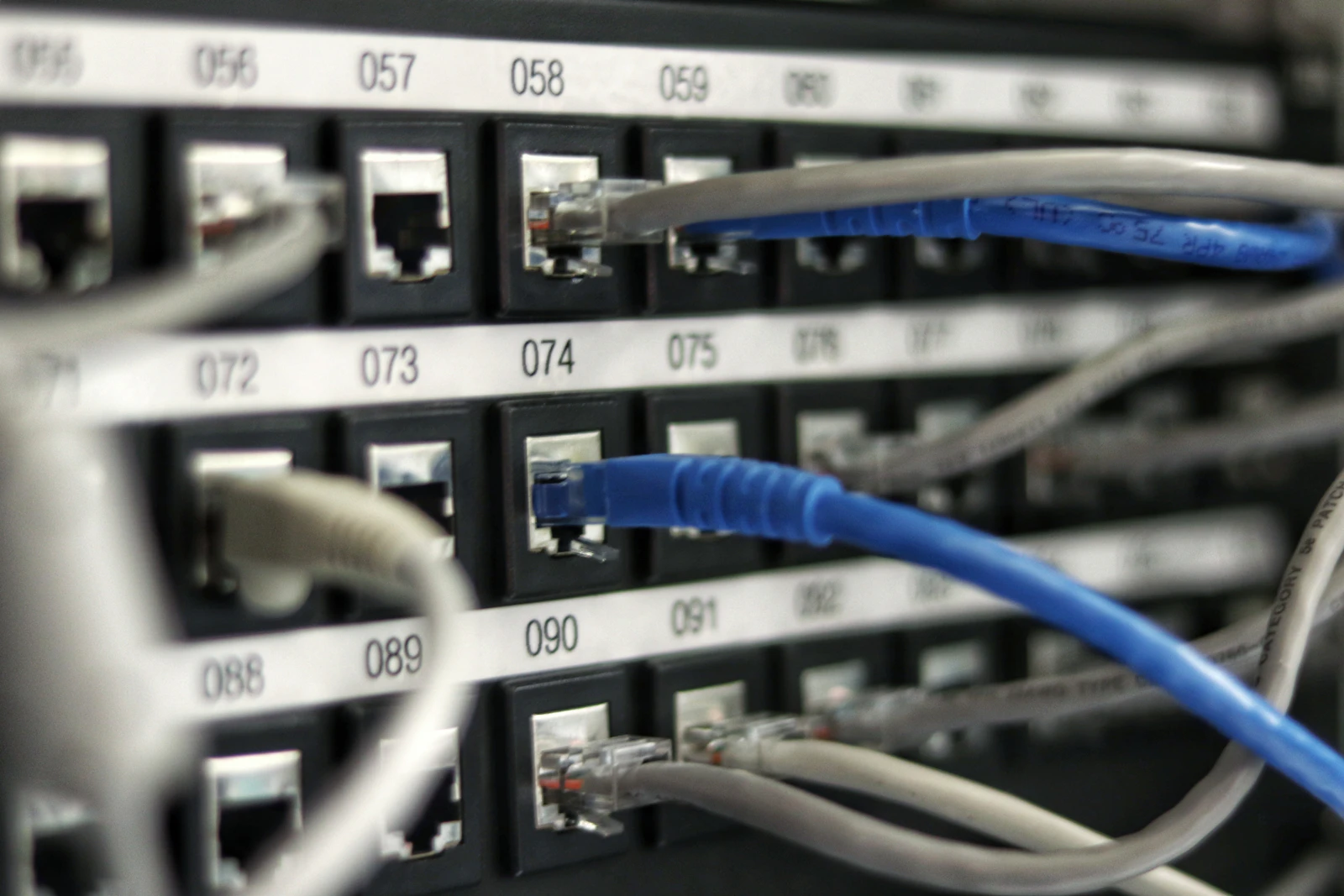
Edge network optimization is the only reliable method for sustaining high MOS scores across a distributed workforce.
Codec Ceilings and QoS Remediation
It is critical to understand that your chosen audio codec sets a hard ceiling on your maximum possible MOS. The uncompressed G.711 codec uses ~80 kbps of bandwidth and can achieve a 4.4 MOS. However, if you deploy the highly compressed G.729 codec to save bandwidth (using only ~30 kbps), your theoretical maximum MOS is hard-capped at 3.9, even on a perfect fiber network.
To sustain high MOS ratings across an enterprise LAN, administrators must rigorously enforce Quality of Service (QoS) tagging. By marking all SIP signaling with DSCP CS3 and all RTP media packets with DSCP EF (Expedited Forwarding), routers are forced to prioritize voice traffic ahead of bulk data downloads, virtually eliminating localized jitter and packet loss during peak office hours.